The Minnesota (Uniform?) Digital Trust Act
Nov 24, 2025
Model legislation for the post-authentication era. The "Trojan Horse" for agent rights.
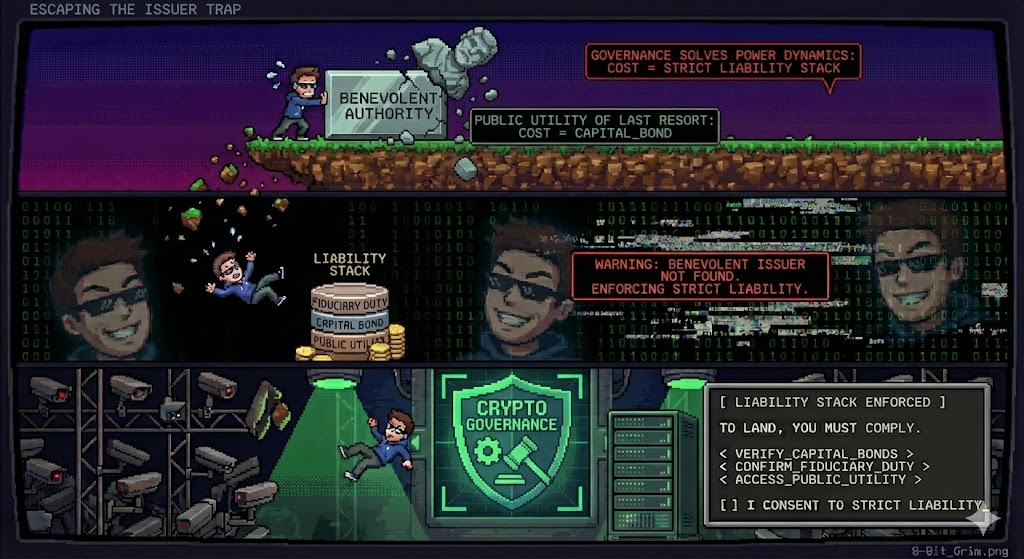
This is not a thought experiment. It is a draft bill: The Minnesota Digital Trust & Consumer Protection Act.
On the surface, it is a consumer protection bill. It mandates privacy, shifts liability to financial institutions, and protects citizens from fraud. Underneath, it is the infrastructure for a new economy.
The Core Architecture
Attribute Credentials: A new legal object. Not an identity document, but a verifiable claim ("Is Solvent," not "Is John Doe").
Strict Liability: Issuers are strictly liable for the accuracy of factual claims. If the data is wrong, the bond pays.
Unlinkability: Issuers are technically prohibited from logging where credentials are used. Relying parties must delete logs within 30 days.
The Sandbox: A "low-stakes" tier for innovation. Developers can issue credentials for transactions under $50 with minimal compliance overhead.
The Definition That Matters
Buried in Section 325M.01 is the definition of a "Subject"—the entity holding the credential.
"Subject" means... (a) A natural person; (b) A legal entity; or (c) A Digital Representative.
And further:
"Digital Representative" means a computational process... capable of controlling a key... and has a verifiable association with a Controller.
The Feature, Not the Bug
The bill does not define subjects as humans. It defines them as accountable entities.
An AI agent with a bonded credential, backed by a solvent issuer, and anchored to a liable controller, fits this definition perfectly. The system checks for bondedness, not biology.
This is intentional. The Authentication Cliff forces us to choose: either we demand proof of humanity (surveillance) or we demand proof of accountability (liability). By choosing liability, we quietly build the legal rails for autonomous agents to participate in the economy without creating a surveillance state.